Lorem ipsum dolor sit amet consectetur, adipisicing elit. Ut sunt quasi doloremque magni pariatur iure.

Deadline -16.08.2026
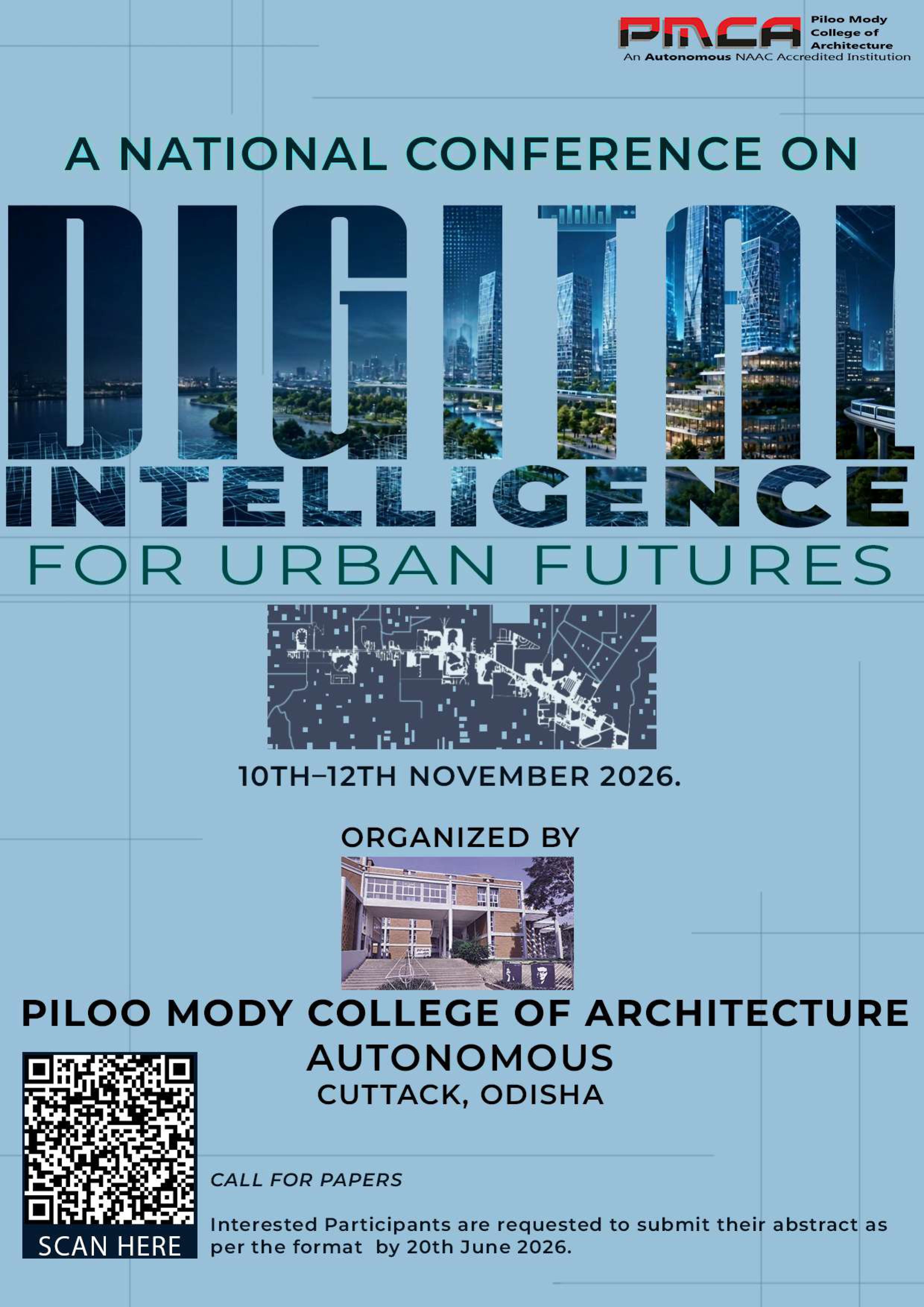
https://docs.google.com/forms/A National Conference on “Digital Intelligence for Urban Futures” is beingorganized by Piloo Mody College of Architecture, Cuttack, Odisha, during 10th, 11th&12th November 2026. This Conference aims to provide an enriching platform bringing together academicians, researchers, practitioners, and students to explore emerging trends, innovative technologies, and transformative ideas shaping the future of urban environments through digital intelligence. It also aims to explore the integration of digital technologies such as AI, IoT, big data, digital twins, and GIS in shaping sustainable, resilient, and inclusive urban environments.This National Conference seeks to promote interdisciplinary interaction among experts working in architecture, urban planning, data science, artificial intelligence, geospatial technologies, and smart infrastructure systems.
Activity |
Finalised Date |
|---|---|
Call for Papers |
20th May |
Abstract Submission |
20th June |
Abstract acceptance notification |
30th June |
Full Paper Submission |
16th August |
Review Feedback |
15th September |
Revised Paper Submission |
30th September |
Early Bird Registration |
30th Sep - 15th Oct |
Conference Dates |
10th -12th November |
The conference themes collectively explore the transformative role of Artificial Intelligence in shaping the future of the built environment across multiple scales and disciplines. They encompass the integration of AI in urban and architectural design, planning, infrastructure, and spatial analysis to create more efficient, responsive, and data-driven environments. The themes also highlight the application of AI in addressing critical global challenges such as climate change mitigation and adaptation, as well as enhancing disaster response and recovery mechanisms. Further, they emphasize the use of AI in preserving and reconstructing digital heritage, enabling advanced engineering solutions for urban systems, building technologies, and construction management. Additionally, the role of AI in interior and urban landscapes is explored with a focus on improving human wellbeing, comfort, and overall quality of life, thereby presenting a holistic approach to intelligent and sustainable urban futures.
"Futures" signals multiple possible trajectories, scenarios, and disciplines. Urban challenges aren't singular — smart cities, climate resilience, mobility, housing, equity are all different futures we're designing for.
This sub-theme explores the integration of Artificial Intelligence in architectural and urban design processes to improve creativity, efficiency, and decision-making. AI tools can assist in generative design, simulation, visualization, and performance analysis of buildings and urban spaces. It also examines how digital technologies influence architectural theory, spatial perception, and human-centered design approaches. The theme encourages innovation while maintaining the importance of cultural, social, and contextual aspects in design.
AI-assisted architectural and urban design processes
Parametric and algorithmic design approaches
Data-driven form generation and optimization
Human–AI collaboration in design
Digital design pedagogy and theory
Smart Interiors & intelligent building interface
This sub-theme focuses on the use of AI, GIS, big data, and digital modelling techniques in urban and regional planning. Intelligent systems help analyze transportation networks, land-use patterns, infrastructure demand, and population growth. AI-based spatial analysis supports evidence-based planning and improves the efficiency of urban services and resource management. The theme highlights the role of digital technologies in creating smarter, more connected, and sustainable cities.
GIS and geospatial technologies
Urban morphology and spatial analytics
Infrastructure planning and urban services
Transportation planning and mobility analysis
Smart city planning and governance
Policy frameworks and decision-support systems
This sub-theme addresses the application of AI and digital technologies in tackling climate change and promoting sustainable urban development. AI can support energy optimization, environmental monitoring, disaster prediction, and climate adaptation strategies. Digital tools help assess urban vulnerabilities and improve resilience against natural hazards and environmental risks. The theme emphasizes sustainable planning practices that balance ecological protection, economic growth, and social well-being.
Climate-responsive architecture and urban design
Urban heat island mitigation and thermal comfort
Water-sensitive urban design and flood resilience
Life-cycle assessment and circular economy
Environmental simulation and performance analysis
Sustainable materials and construction practices
This sub-theme examines how AI and automation are transforming engineering systems, construction practices, and building technologies. Intelligent systems can improve project management, structural monitoring, cost estimation, and construction safety. Technologies such as digital twins, robotics, and smart sensors enhance efficiency and reduce construction time and resource wastage. The theme promotes innovative and data-driven approaches for developing smarter and more efficient urban infrastructure.
AI in structural and infrastructure engineering
Smart building systems and automation
Construction planning, scheduling and monitoring
Digital fabrication and additive manufacturing
BIM, CIM and digital twin technologies
Predictive maintenance and asset management
This sub-theme explores the use of AI and digital documentation methods for preserving cultural heritage and historic environments. Technologies such as 3D scanning, digital mapping, and virtual reconstruction help in accurate documentation and restoration processes. AI-based analysis can support conservation planning, heritage risk assessment, and long-term preservation strategies. The theme encourages the integration of modern technology with traditional conservation principles to safeguard cultural identity and historical value.
Digital documentation and heritage recording
HBIM and heritage information systems
Cultural landscapes and historic urban areas
Conservation materials and techniques
Heritage management and policy frameworks
Virtual and augmented reality for heritage interpretation
This sub-theme focuses on the role of AI and digital tools in designing sustainable and resilient landscapes. Advanced technologies assist in environmental analysis, ecological planning, water management, and landscape visualization. AI-based systems can help create adaptive outdoor spaces that respond to climate, biodiversity, and user needs. The theme promotes innovative landscape solutions that improve environmental quality, public health, and urban liveability.
Urban green infrastructure
Sustainable site planning
Blue-green infrastructure systems
Public open spaces and recreational landscapes
Campus and institutional landscapes
Climate-resilient landscape strategies
Authors are requested to carefully follow the submission guidelines to ensure a smooth review and publication process.
Prepare your Abstract
Submit an abstract between 200 to 250 words.
The abstract should clearly state the research objective(s), methodology, key findings, and significance.
Select the most appropriate conference track/ theme.
Submit your Abstract
Complete the submission via the designated online form (Google Form).
Upload your abstract in .doc, or .docx format.
Include full author details: names, affiliations, and email addresses within the document.
Provide 5 keywords reflecting the research domain and focus area.
Notification
Authors will be informed of the decision via email.
Accepted abstracts will receive instructions for registration and fee payment.
Registration and Payment
Authors must complete registration within the specified deadline.
Fee categories include Early Bird, Regular, and Late Registration.
Delayed payments may attract additional charges or risk exclusion.
Paper Specifications
Full paper length: Between 3500 to 5,000 words excluding abstract but including references.
Language: English.
The paper must align with the selected conference theme/track.
Follow the official Paper Template, including:
Abstract with keywords
Introduction including problem statement and research aim
Literature Review
Methodology
Results and discussion
Conclusion
References in APA 7th Edition style
Submission Process
Full paper submission links will be shared after abstract acceptance.
Ensure submission before the stated deadline to be considered for review.
Initial Screening
All submissions will undergo plagiarism/ similarity checks
Papers will be reviewed by at least two independent reviewers.
Review and Decision
Editorial decisions are based on reviewer feedback.
Possible outcomes: Accept, Accept with Revisions, or Reject.
Revision Process
Authors receiving revision comments must resubmit within the deadline.
Multiple rounds of review may be required.
Final decisions by the Editorial Board are binding.
Communication
All communication will be conducted via email.
Authors are advised to check Inbox and/ or spam/ junk folders regularly.
Post-presentation, authors must complete publication consent formalities as required.
Each presenter will have 10 minutes for presentation.
A moderated Q & A session will follow each session.
Maximum 10 slides (including title slide).
Slides should be visually clear, concise, and engaging.
Title Slide: Paper title, author(s), affiliation, conference name
Introduction: Context, problem, research aim
Core Content: Methodology, key findings
Conclusion: Insights and implications
Visuals: Use diagrams, charts, and images effectively; avoid text-heavy slides
Focus on clarity and impact, not reading from slides.
Rehearse to stay within time limits.
Be prepared for questions and discussion.
Authors are expected to adhere to high standards of academic integrity:
Originality: Submissions must be original and unpublished.
Accuracy: Data and findings must be reported truthfully.
Proper Citation: All sources must be appropriately acknowledged.
Ethical Conduct: Fabrication, falsification, and plagiarism are strictly prohibited.
Conflict of Interest: Any potential conflicts must be disclosed.
Exclusive Submission: Simultaneous submission to other venues is not permitted.
All manuscripts will be screened using plagiarism detection software.
A similarity index above 10% and AI content above 5% may require revision or justification.
Confirmed plagiarism will lead to rejection and possible further action.
All accepted and presented papers will be published in the Conference Proceedings Book (subject to compliance with review and submission guidelines).
Authors must adhere to the following principles of academic integrity:
Originality: Submissions must be original work and must not have been previously published or under consideration elsewhere.
Accuracy and Integrity: Authors are responsible for the authenticity of their data, analysis, and findings. Fabrication, falsification, or misrepresentation is strictly prohibited.
Proper Attribution: All sources, ideas, data, and contributions of others must be appropriately cited.
Conflict of Interest: Any financial, professional, or personal relationships that may influence the research must be clearly disclosed.
Exclusive Submission: Simultaneous submission of the same manuscript to multiple conferences or journals is not permitted.
Failure to comply with these standards may result in rejection or withdrawal of the paper at any stage of the publication process.
To maintain the quality and credibility of the proceedings:
All manuscripts will undergo plagiarism screening using standard detection tools.
A similarity index exceeding 10% and AI content above 5% may trigger further scrutiny, and authors may be asked to revise or justify overlaps.
Confirmed plagiarism, including self-plagiarism and unattributed reuse, will result in immediate rejection.
Serious violations may lead to blacklisting from current and future editions of the conference.
Note: Publication is not automatic. Only papers that successfully pass peer review, comply with ethical standards, and are presented at the conference will be included in the proceedings.
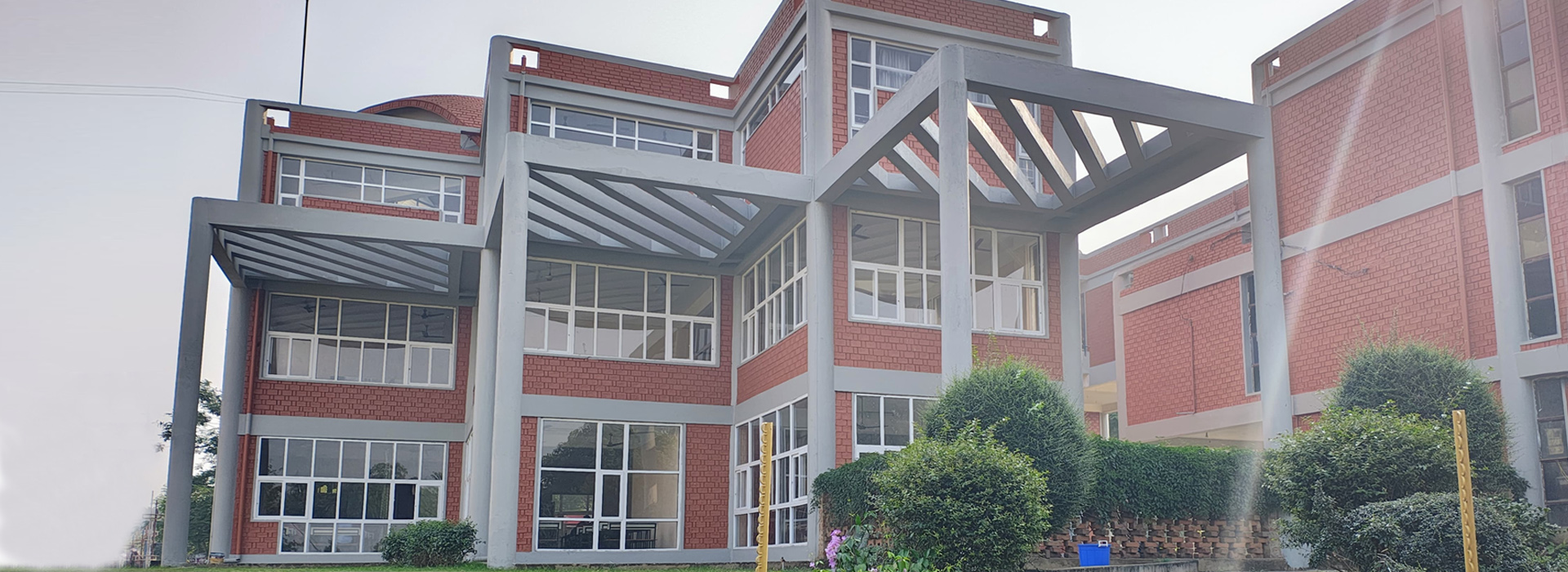
Venue: Piloo Mody College of Architecture, Cuttack.
Address: Piloo Mody College of Architecture- Autonomous(ABIT Group of Institutions) Sector 1, CDA, Cuttack, Odisha, India - 753014
Email: [email protected]
Dr. Ruma Bhatt: +91 7978429157
Dr. Rohit Kumar: +91 8130223162
Registration fee is non-refundable.
Registration is mandatory for all presenters.
The registration fee covers a single paper only.
Registration fee includes conference kit, presenting/participating in the conference and lunch & snacks.
Registration fee does not include accommodation.
The conference will provide 1 (ONE) Certificate of A4 size to the presenter of the paper in the conference.
Other authors will be included in the same order as in the paper affiliation provided by the authors.
Category |
Fee (₹) |
|---|---|
Academicians/Industry |
3500 |
Faculty(ABIT, PMCA) |
3000 |
PhD Scholars/Co-author/Attendee |
2500 |
PG/M.Arch/M.Tech/B.Arch Students |
500 |
Beneficiary Name- DIUF 2026
A/C No: 718102010002670
Bank: UNION BANK OF INDIA
Branch: MARKAT NAGAR, CUTTACK
IFSC Code: UBIN0571814